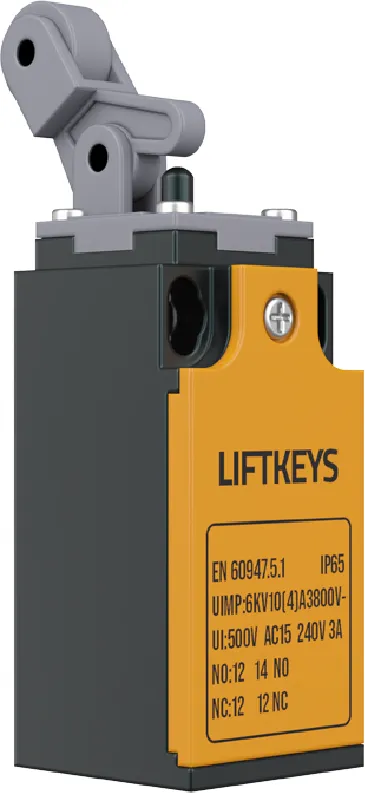
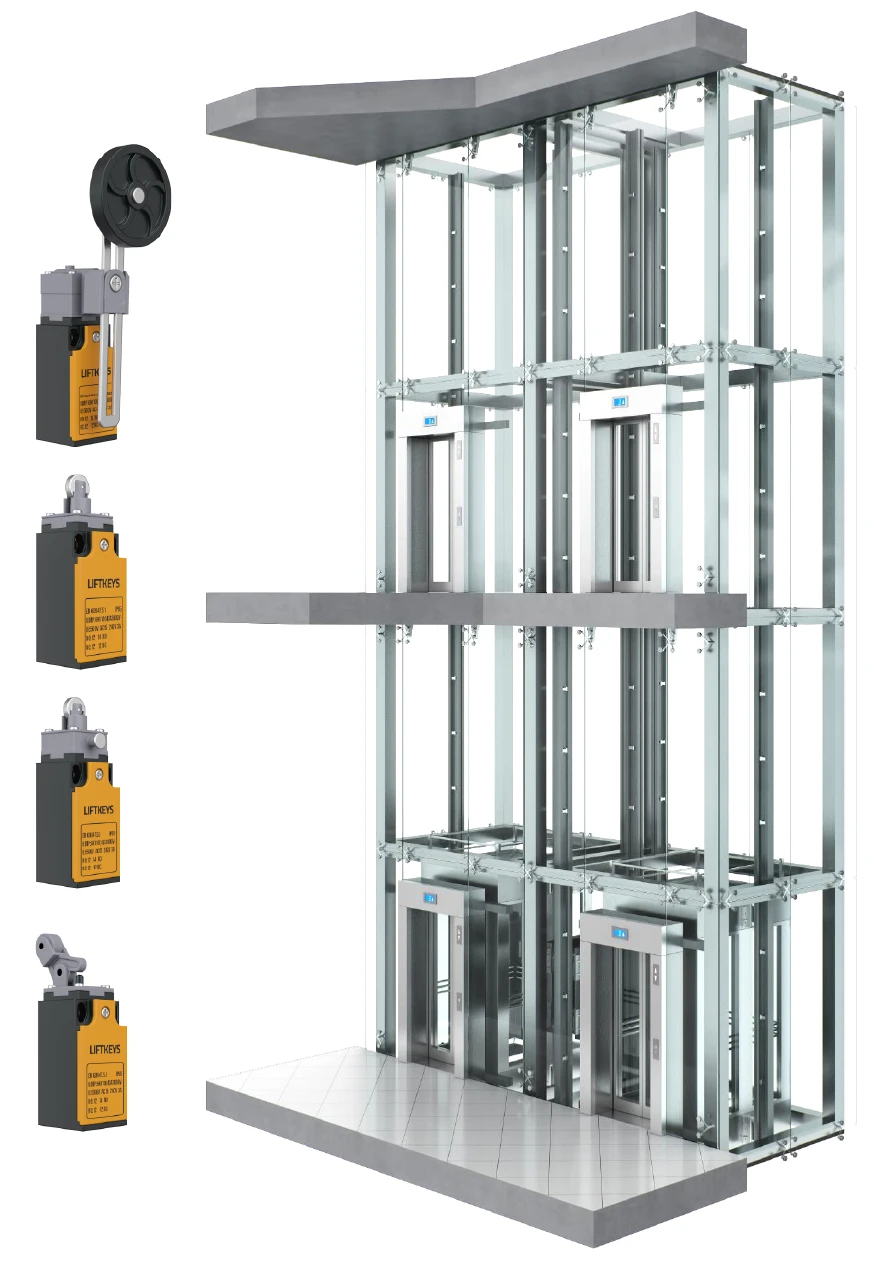
Safety is not just a function;
it is a standard at LiftKeys.
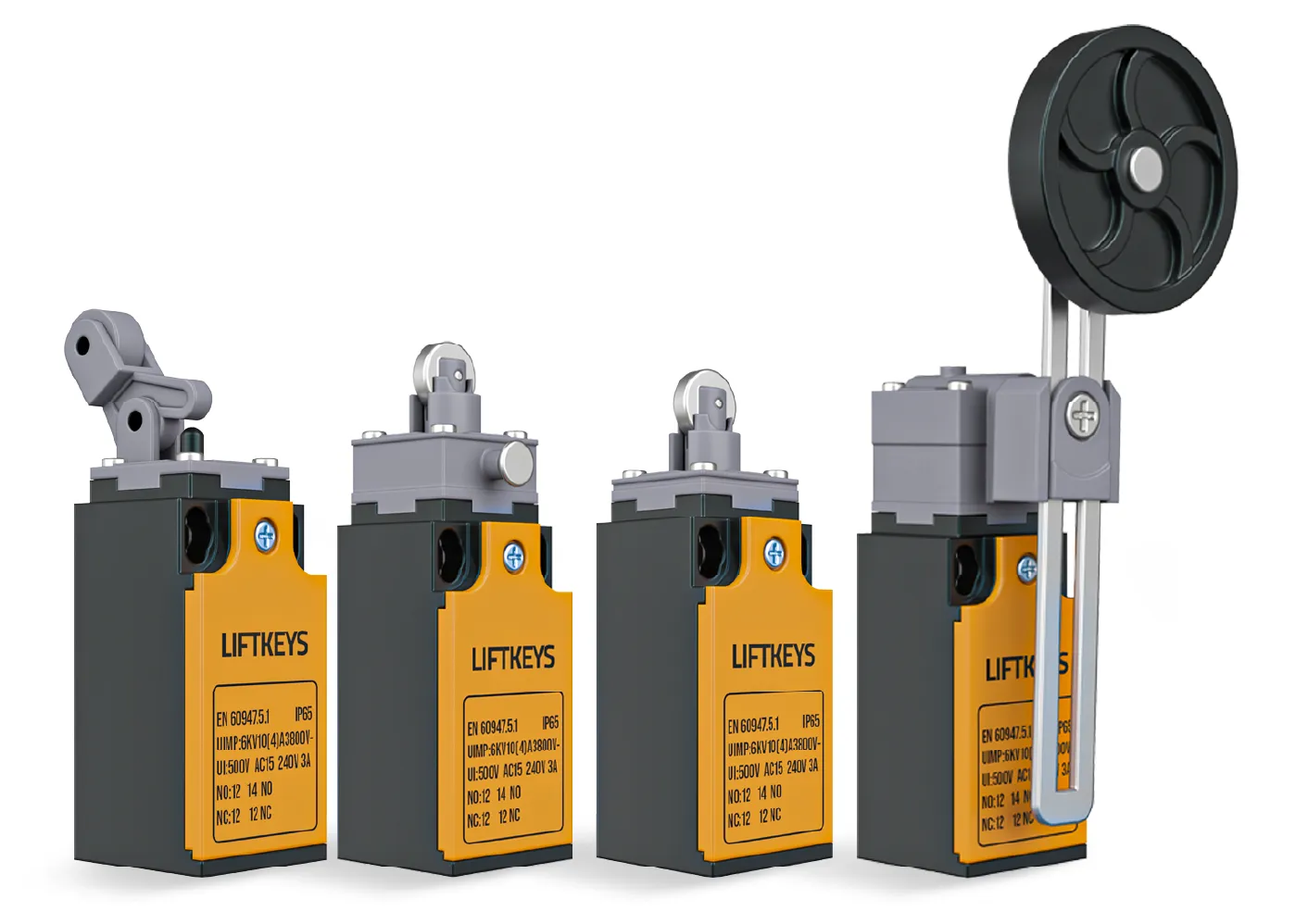
Not every switch in the elevator performs the same function. Some stop the elevator, while others prevent it from moving again. Here are the vital differences between them:
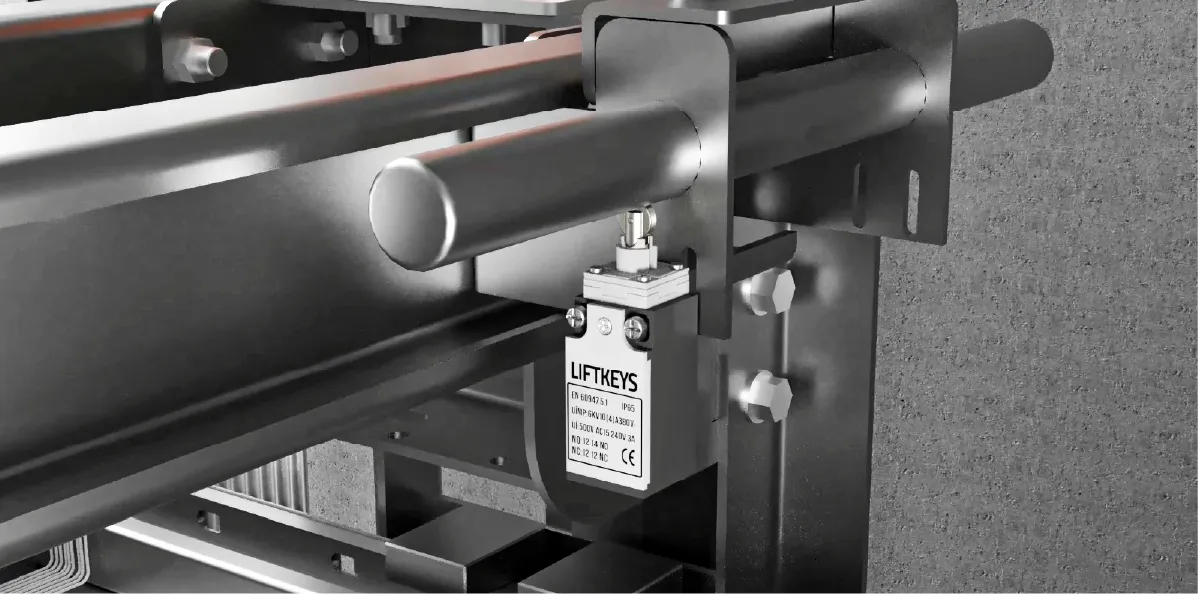
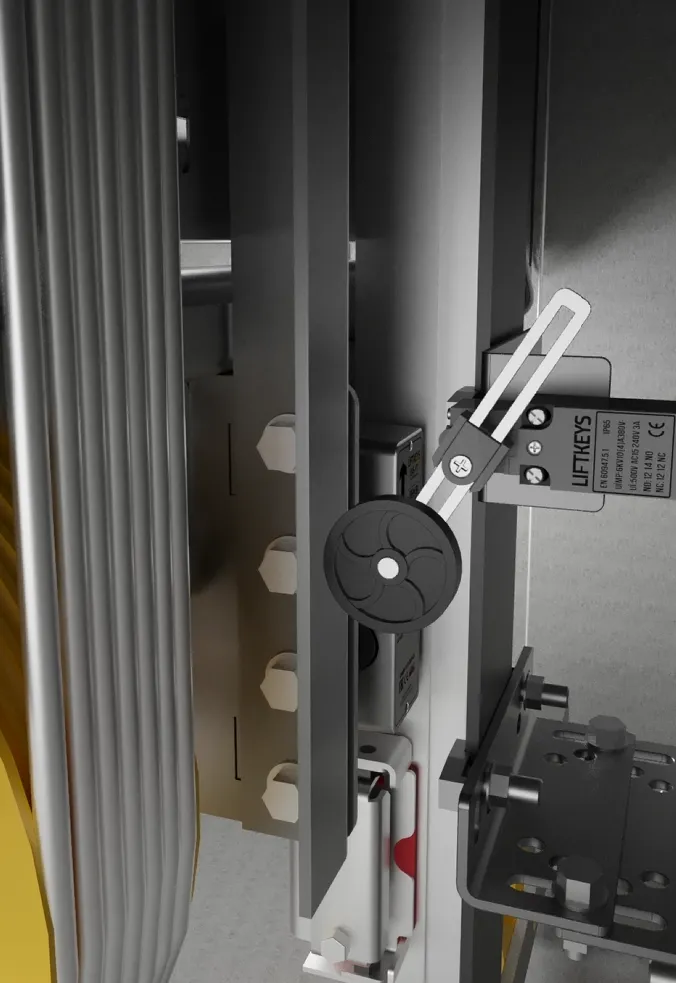
These switches are the "eyes" of the elevator's normal operating routine. It operates when an arm on the car (cam/vane) strikes the roller.
Informs the control system that the elevator has passed the floor level or is approaching the limits.
When the pressure on the roller is released (as the car moves away), it restores its contact to the original state thanks to the internal spring.
Used for floor stopping or deceleration limits. Thanks to its rotating head, it adapts to triggers coming from any angle.
This switch is the strictest safety measure in the elevator's safety chain. It is usually red in color and has a mechanical locking mechanism on it.
When the elevator exceeds a dangerous limit (final limit), it cuts the circuit and locks the elevator by braking.
Once this switch is triggered, the system does not correct itself even if the cabin moves away from there. A technical person must go to the machine room or the shaft and manually reset it by pressing the button on the switch.
If the elevator has passed the final limit, it means there is a major fault. The non-resetting switch does not allow the elevator to operate again until the fault is resolved.
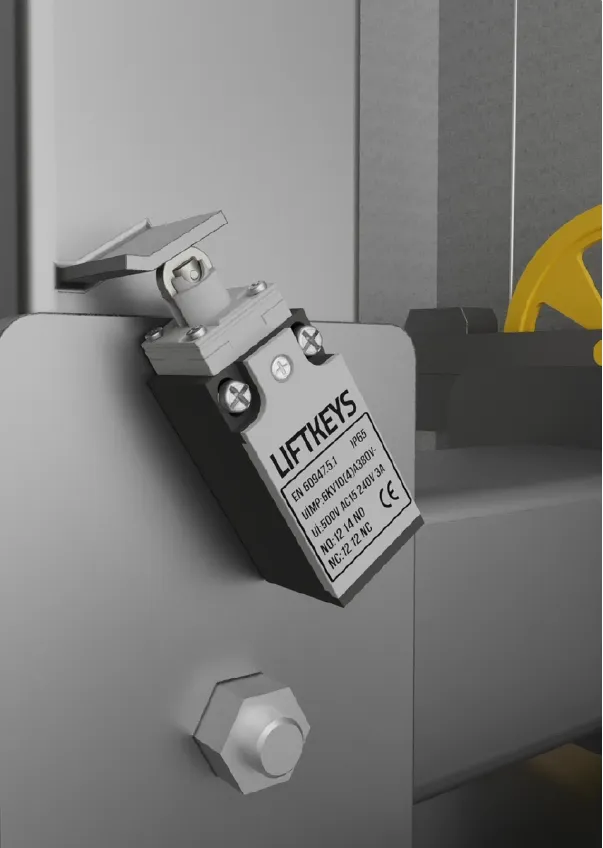
It is the middle ground between a roller switch and a non-reset (manual reset) switch. It provides safety but is used in points where you do not want the system to lock down completely.
It instantly cuts the circuit when an out-of-limit movement is detected.
When the triggering element (car) is pulled away from the switch, it automatically returns to the "ready" position through its internal mechanism. It does not require manual intervention.
Preferred for speed governors or temporary safety zones.
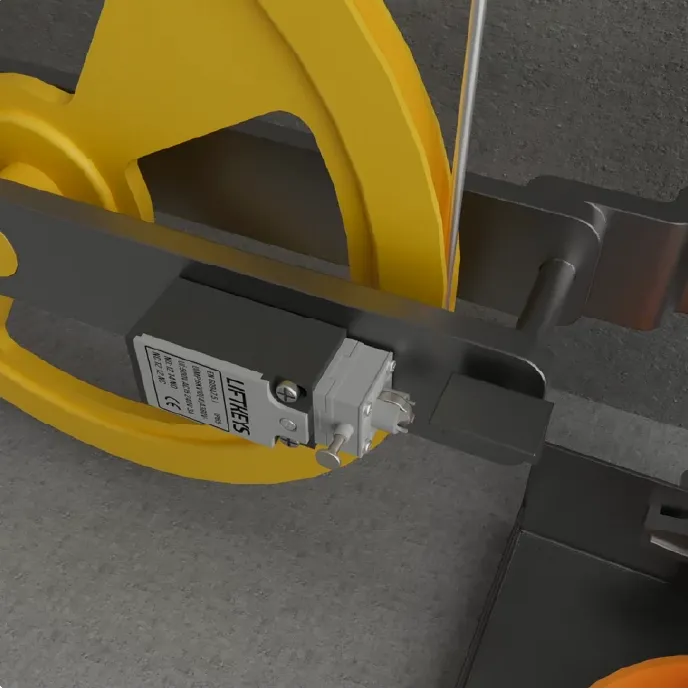
Side-Actuated Switches are engineering marvel solutions developed especially for narrow and difficult-to-install areas such as elevator shafts.
These switches operate by the triggering mechanism sliding or striking across the side surface rather than from the top of the switch.
Provides the possibility of parallel installation to the triggering mechanism. Its reinforced structure against side pressures absorbs the vibration at the moment of impact and does not disturb the stability.
International standards applicable to all LiftKeys switch series.
| Feature / Specification | Roller Switch | Reset Switch (Auto-Reset) | Non-Reset Switch (Manual Reset) |
|---|---|---|---|
| Sensitivity | Medium | High | Highest (Final) |
| Intervention | Resets automatically | Resets automatically | Manual intervention is required! |
| Safety Role | Direction / Stopping | Safety Circuit | The Last Line of Defense |
Every moving and safety-oriented part in the elevator is monitored by a switch. Here are the vital functions of switches in the equipment you offer:
Pit Ladder: Prevents the elevator from operating until the ladder is removed from its stowed position or correctly positioned (Personnel safety).
Hydraulic Buffers: It takes the system under protection by cutting the safety circuit when the car or counterweight rests on the buffer.
Governor and Brakes: In case of overspeed, it stops the system electrically the moment mechanical braking starts.
Movable Car Top Balustrade: Stops the normal operation of the elevator when the balustrade is closed or in the wrong position, only allowing maintenance mode.
Gearless Locking Device: Monitors whether the device that locks the motor during maintenance is engaged or not.
Prevents the elevator from moving out of the safe zone when the apron is open or not fully locked.
Request a Quote
We do not offer cheap products; we offer the right product, with the right quality and at the right price. If you want to meet quality, write to us.