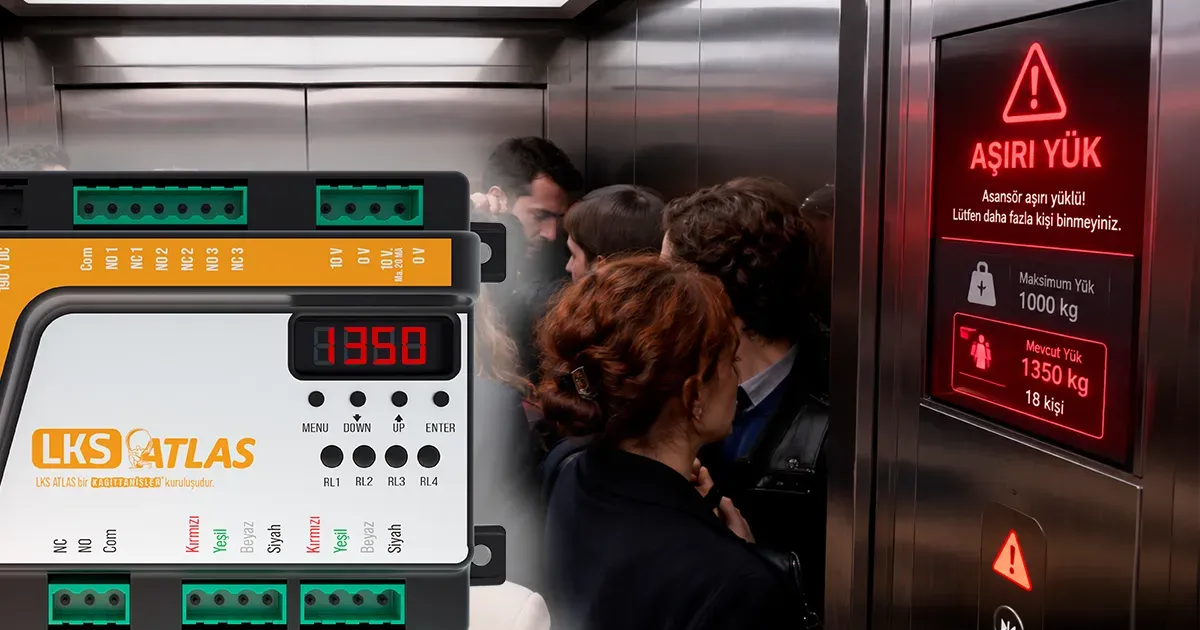
The Impact of Overload Sensors on Elevator Motor and Rope Lifespan: A Secret Recipe for Savings
One of the largest expense items for any building is undoubtedly the periodic maintenance of elevators and the substantial breakdown costs that arise from time to time. In particular, a burnt-out elevator motor or worn-out load-bearing steel wire ropes mean unexpected, high-budget expenses for building managements. Many people view elevator safety systems merely as "legal requirements that prevent accidents." However, these systems also serve as an engineering shield that protects your building's budget.
So, what are the benefits of an overload sensor, and how does this small piece of equipment directly affect elevator motor and rope lifespan? Let's examine both the financial and mechanical aspects of the matter together.
1. Protection of the Elevator Motor (Overcurrent Barrier)
Elevator motors (the machine-motor drive unit) are designed to move the cabin and counterweight along a vertical axis according to a specific balancing principle. Every motor has a maximum load and current (amperage) limit that it can safely draw.
- Motor Under Overload: When the cabin is loaded beyond its capacity, the motor begins to draw significantly more current than normal in order to lift this excessive weight.
- The Result: Overcurrent causes the motor windings to heat up rapidly. If the elevator lacks an overload system to prevent this condition, or if the system responds too slowly, the motor windings burn out (short-circuit).
- Savings Impact: A precise overload sensor blocks the system before the motor can make even a single revolution. In doing so, it saves your building from thousands of dollars in motor rewinding or replacement costs.
2. Protection of Steel Ropes and Sheave (Wear and Elongation Control)
The elevator cabin is carried via steel wire ropes passing over the traction sheave. The lifespan of the ropes depends directly on the tension they are subjected to and the friction against the sheave.
- Rope Elongation: Excessive weight causes steel ropes to stretch permanently at a microscopic level and reduce in diameter. Thinning ropes lose their structural strength.
- Sheave Wear and Slippage: Ropes forced to move under load exceeding rated limits exert extreme pressure on the grooves of the traction sheave. This causes premature wear on the sheave grooves as well as rope slippage on the sheave.
- Savings Impact: An overload sensor limits the maximum tension that the ropes can be subjected to. As a result, the lifespan of the ropes is extended by at least twofold, while preventing costly expenses involving heavy mechanical labor such as sheave replacement.
3. Reducing the Load on the Brake Assembly and Gearbox
The mechanical brakes that keep the elevator aligned at floor levels and the gearbox that transmits motor power are subjected to torque and friction far above normal when under excessive weight. Thanks to the overload system, these components always operate within their optimal range, minimizing brake lining wear and gear failure risks.
Return on Investment: Smart Payback with Liftkeys Atlas
Cutting corners on elevator spare parts leads to much larger bills in the long run. Mechanical spring-loaded or low-quality overload sensors sag over time and measure weight inaccurately. Every moment they fail to detect capacity exceedance, they steal lifespan from your elevator's motor and ropes.
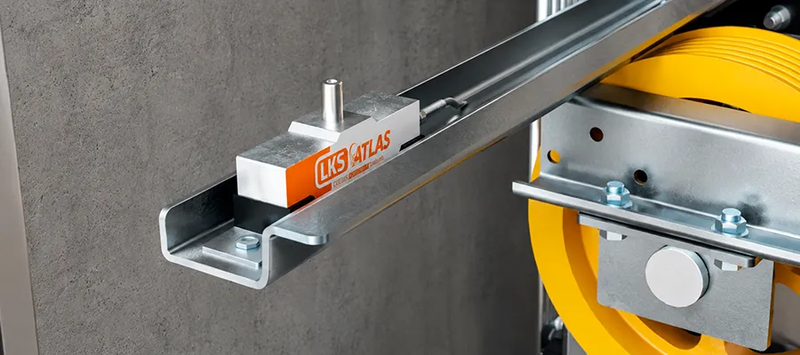
Developed by Liftkeys, the Atlas Overload System is designed to protect the mechanical heart of your building. With millimeter-precision digital weight monitoring, Atlas never subjects your elevator's motor, ropes, or braking system to loads beyond their rated capacity. Paying for itself in a very short time, Atlas reduces the servicing workload for maintenance companies while preventing surprise repair expenses for building managements.
Frequently Asked Questions (FAQ)
- Does an overload sensor affect electricity bills? Indirectly, yes. An overloaded elevator motor draws a very high starting current (inrush current). By preventing the elevator from operating in this inefficient and power-hungry mode, an overload sensor contributes to energy savings.
- Do rope-type overload sensors damage the ropes? No. Quality rope-type sensors such as Liftkeys Atlas are installed with wide-surface specialized locking clips that do not compromise the rope's structure. They do not harm the rope; on the contrary, they protect it by monitoring and controlling rope tension.
- Can an overload system be installed after an elevator motor has already burnt out? Of course it can, but that would be "taking precautions after the damage has already occurred." The prudent approach is to secure the elevator with a digital overload system like Atlas before a catastrophic and expensive breakdown, such as a burnt-out motor, happens.
