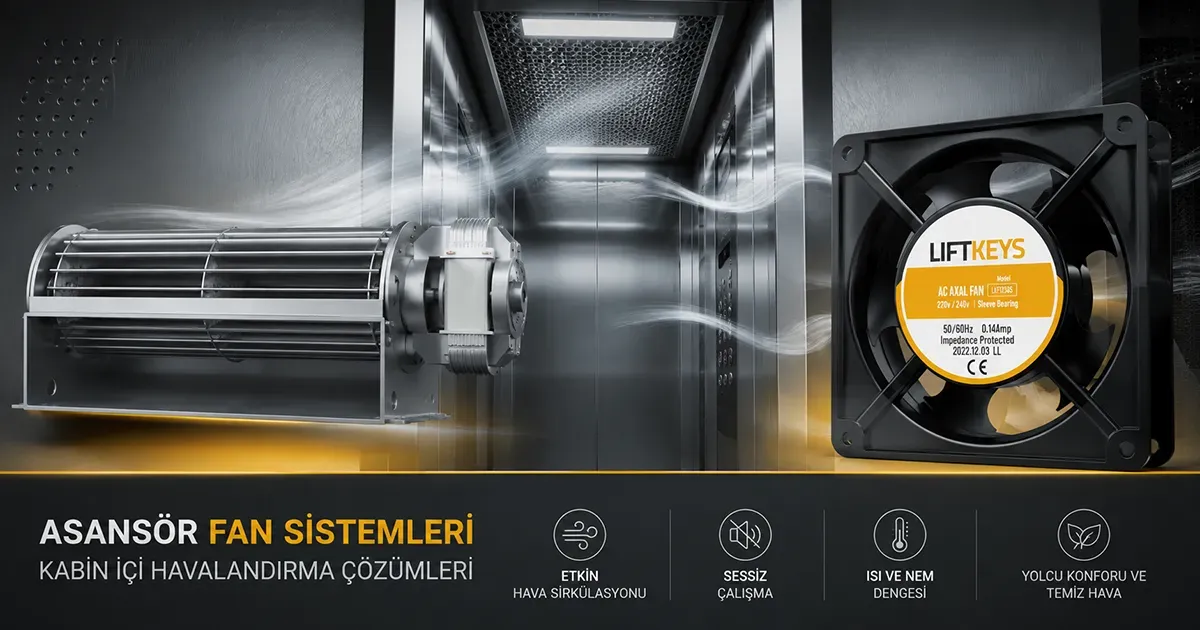
Elevators, forming the backbone of vertical transportation in modern buildings, carry thousands of people between floors every day. However, since elevators are windowless, narrow, and completely enclosed boxes, this directly affects the air quality inside the cabin. Especially during summer months or peak traffic hours, stuffiness and temperature inside the cabin can rise rapidly. This is precisely where one of the most critical components that allows passengers to breathe comes into play: elevator fan systems and ventilation units.
So, what are elevator fan systems that directly determine an elevator's comfort level, how do they work, and what are the effects of in-cabin air circulation on passenger psychology? Let us examine in our detailed technical guide.
What Are Elevator Fan Systems and How Do They Work?
Elevator fan systems are electric motor units integrated into ventilation grilles located on the cabin ceiling or side panels that draw in fresh air while exhausting stale, high-carbon-dioxide air from inside the cabin.
The system generally works according to the following scenario:
- Photocell and Timer Integration: In modern elevators, fans do not run continuously. When a passenger steps into the cabin, the door photocell or in-cabin weight sensors (overload / load cells) are triggered and the fan turns on automatically.
- Automatic Shutdown (Stand-by): After the cabin empties, the fan continues running for a specified duration configured on the control panel (usually 2-5 minutes). Once the cabin air is fully refreshed, it switches to sleep mode to save energy.
The Vital Importance of In-Cabin Air Circulation
Proper fan operation in an elevator is not merely a matter of "coolness", but a multi-faceted safety and comfort standard:
1. Reduction of Claustrophobia and Panic Risks
Elevators are among the most stressful areas for individuals with a fear of enclosed spaces (claustrophobia). In the event of a potential breakdown between floors or a power outage, the operation of the cabin fan blowing fresh air inside keeps passengers calm. A stuffy and hot cabin triggers panic levels by creating a feeling of oxygen deprivation in passengers.
2. Hygiene and Prevention of Bad Odors
Throughout the day, elevators can harbor heavy odors from pets, carried waste, sweat, or perfumes. An elevator fan with strong airflow capacity (circulation capacity) prevents these bad odors from lingering inside the cabin and offers a fresh environment on every ride.
3. Protection of In-Cabin Electronic Components
Spotlights, digital displays (LCD screens), and intercom (communication) systems located on the cabin ceiling generate heat while operating. Effective ventilation prevents these electronic boards from overheating, extending the lifespan of multimedia devices inside the elevator.
Fresh and Safe Journeys: Liftkeys Fan Solutions
Maximizing passenger satisfaction and comfort in your elevators begins with choosing a ventilation system with the right airflow capacity and quiet operation. Low-quality fans offering insufficient air circulation or sounding like a tractor while running are a constant source of complaints in buildings.
At Liftkeys, we offer next-generation Elevator Fan Systems solutions most suitable for the volume and architectural structure of elevator cabins. Featuring high blowing capacity, running at low decibels (ultra-quiet), and fully integrated with smart control panel software, our fan models provide uninterrupted freshness in your cabins across all four seasons. Discover Liftkeys quality to add prestige to your building and comfort to your passengers.
Frequently Asked Questions (FAQ)
- Does an elevator fan blow shaft dust into the cabin while running? If low-quality, unfiltered plain fans are used, they can force dust from inside the shaft into the cabin. However, fans designed by Liftkeys for the elevator sector feature special blade designs and ventilation grille protections that optimize airflow direction according to shaft conditions.
- Does the elevator fan continue running when electricity is cut off? If the elevator has an Automatic Rescue Device (ARD) or Uninterruptible Power Supply (UPS), the fan and emergency lighting continue to operate for safety until the elevator reaches the nearest floor during a power outage.
- Does continuous operation of the elevator fan damage the motor? Continuous operation does not directly damage the fan, but it shortens the lifespan of the fan motor and leads to unnecessary energy consumption. The most correct application is to set a "fan timer" (fan delay) on the control panel so that the fan automatically shuts off a few minutes after the elevator empties.
