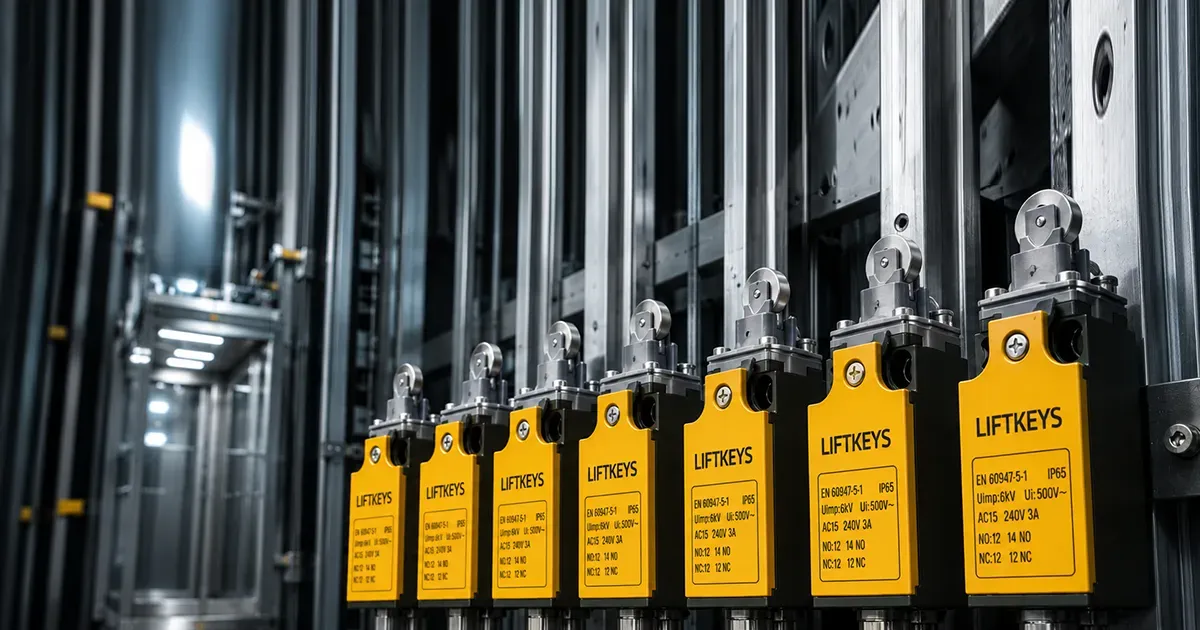
Although an elevator shaft and cabin appear to be purely mechanical structures from the outside, thousands of electrical signals operating with millimetric precision run in the background. The primary components responsible for generating, monitoring, and transmitting these signals to the safety circuit are switches. Depending on the elevator architecture and the control panel operating scenario, there are many types of elevator switches that undertake different duties within the hoistway.
For proper installation and a smooth maintenance process, it is essential to understand the structure and duties of these switches thoroughly. Here are the main safety switches and switch types used in a modern elevator system:
12. Limit Switches (Boundary Limiting Switches)
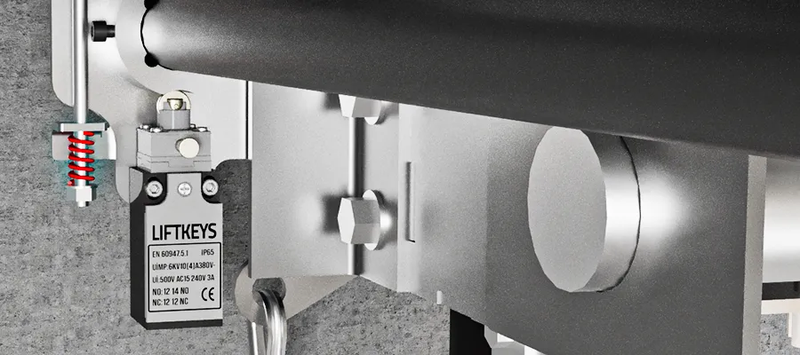
These are mechanical safety devices that prevent the elevator cabin from going beyond the legally permissible top floor (into the hoistway ceiling) or below the lowest floor (into the pit).
- How It Works: When the cabin or counterweight exceeds the specified travel limit, it physically strikes the roller or spring arm of this switch. Upon impact, the contacts inside the switch instantly open.
- Duty: To directly interrupt the safety circuit, mechanically and electrically locking the motor to prevent the cabin from crashing into the pit bottom or colliding with the ceiling mechanism.
3. Pit Bottom and Cabin Top Safety (Stop) Switches
These switches ensure the personal safety of technical staff when they enter the hoistway pit or step onto the cabin top during maintenance, repair, or overhaul procedures.
- How It Works: These are usually yellow-red mushroom-head (Emergency Stop) button or switch mechanisms that lock immediately when pressed and are unlocked by turning manually.
- Duty: To completely prevent the elevator from being called or moved from the outside while personnel are working in the hoistway.
4. Overspeed Governor and Slack Rope Switches
These switches monitor the mechanical safety of the elevator and electrically support the safety gear (parachute) braking system in emergencies.
- How It Works: They are mechanically triggered in cases where the overspeed governor rope is over-tensioned, becomes slack, or when the elevator exceeds its rated speed by 15%.
- Duty: To interrupt the safety circuit and cut off power to the motor milliseconds before the mechanical brakes lock the cabin onto the guide rails.
Uninterrupted Safety, The Right Combination: Liftkeys
The elevator safety circuit is a unified whole, and even a single low-quality switch used in this circuit can cause the entire system to fail in a chain reaction. Switches with depleted mechanical lifespans, dust ingress, or inability to withstand high currents create a constant fault-tracking burden for technical teams.
The Elevator Switch Systems product line developed and offered by Liftkeys brings together all types, from bistable switches to limit switches, under one roof. Featuring IP-certified bodies resistant to dust, moisture, and job site conditions, alongside silver-alloy contacts with high switching cycles, Liftkeys switches integrate seamlessly with your control panel to keep your safety circuit stable and secure at all times.
Frequently Asked Questions (FAQ)
- How should direction and distance be adjusted during limit switch installation?
The roller arms of limit switches must be installed at an angle that ensures completely perpendicular and smooth contact with the strike ramp on the cabin. The distance must be set precisely so that it is not triggered when the cabin is at normal floor level, but activates immediately when it passes the floor by approximately 5-10 cm.
- What does the contact structure of switches (NO / NC) mean?
NO (Normally Open) contacts do not pass current when not triggered. NC (Normally Closed) contacts transmit current continuously when not triggered. For the continuity of the safety chain in elevator safety circuits, switches with NC (Normally Closed) contacts are overwhelmingly preferred.
